CANADA WALKS AWAY FROM US TRADE TALKS AS 50% TARIFFS KICK IN: What The OTTAWA-WASHINGTON Breakdown Means for UGANDA
CANADA WALKS AWAY FROM US TRADE TALKS AS 50% TARIFFS KICK IN: WHAT THE OTTAWA-WASHINGTON BREAKDOWN MEANS FOR UGANDA
By Meddy Walusimbi Omuyiribi/ Sunday 23rd August 2026
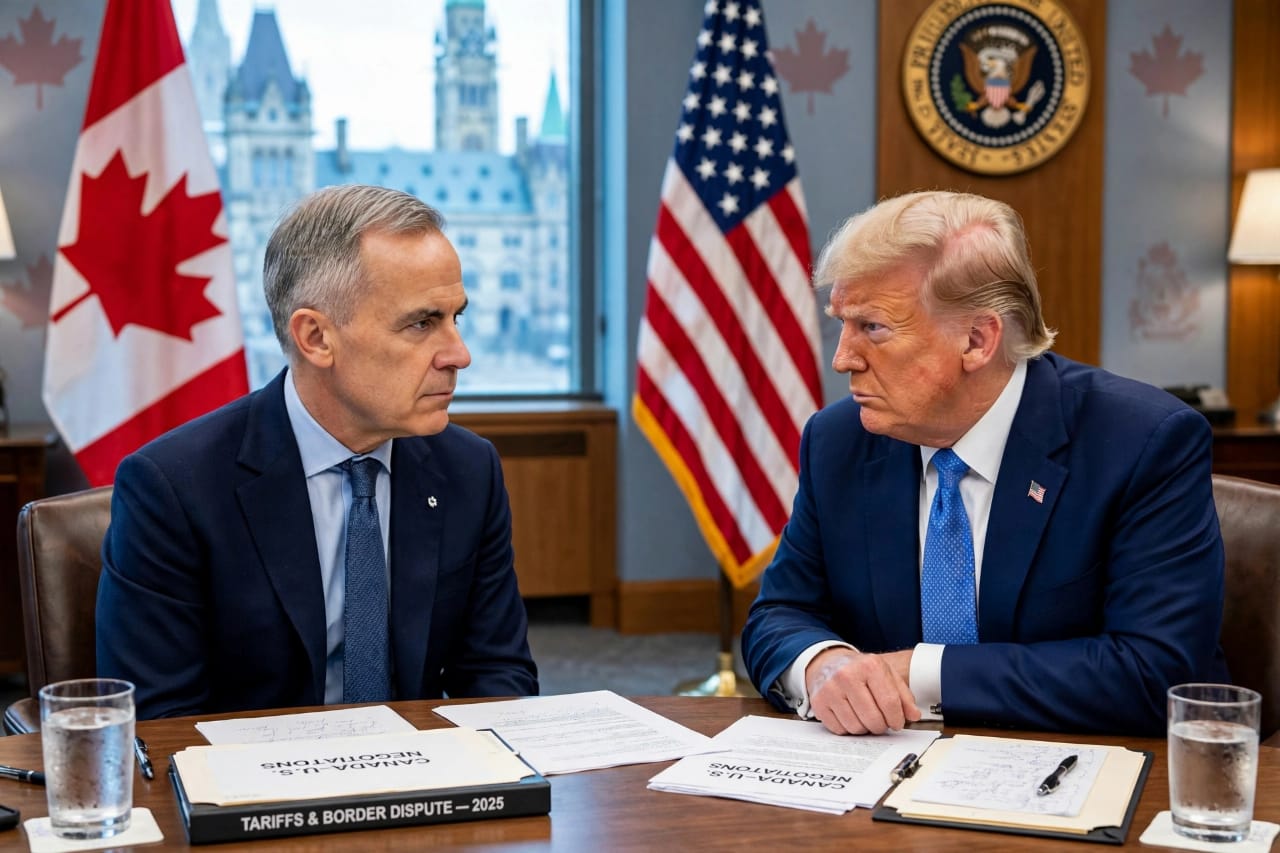
KAMPALA — Canada has suspended all tariff negotiations with the United States, collapsing weeks of talks and triggering a new wave of 50% duties on billions of dollars worth of goods, in a move that signals a deeper fracture in North American trade and could spill over into East Africa’s markets.
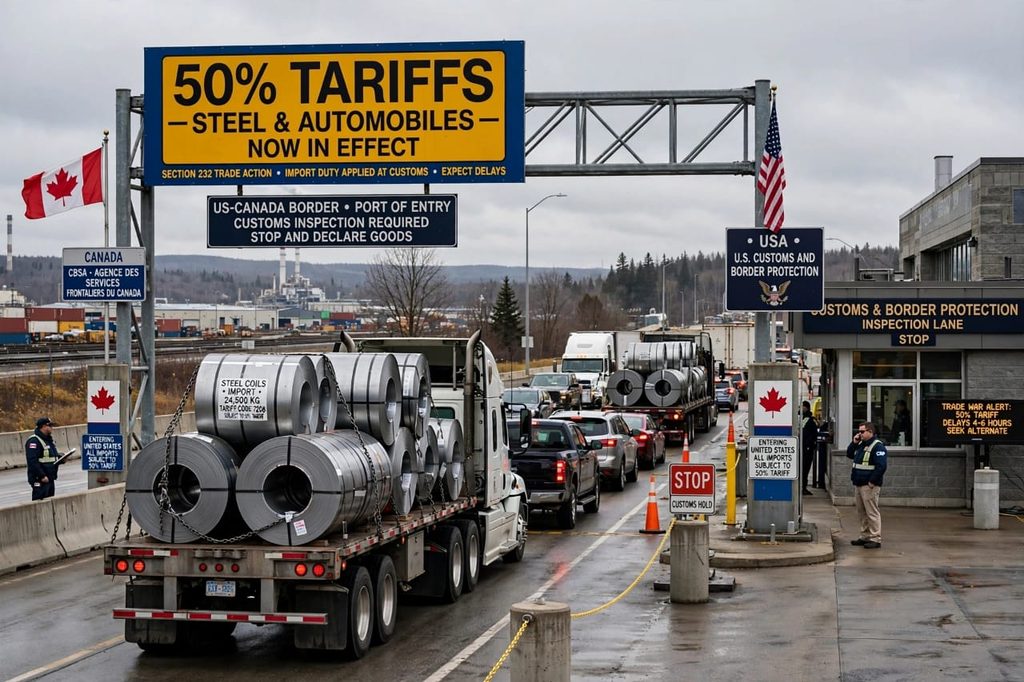
The US-Canada border is the longest in the world at 8,891 km (5,525 miles) across 8 provinces and 13 states with over 120 land ports of entry. Every day about 400,000 people and $2.7 billion in goods and services, $1.6 billion in goods alone by truck and rail cross it, making it the busiest international border, with annual trade of about $760 billion.
The breakdown came on Friday, August 21, just minutes before a second deadline set by Washington expired. Prime Minister Mark Carney, who took office this year, announced that Ottawa was pulling its negotiators from Washington and returning home.
“In recent weeks, we made important progress toward improving Canada’s position as having the best deal in the world with the US,” Carney said in a statement. “However, that progress has not been enough to meet our objectives for Canadians.”
He blamed “last-minute changes in the US proposed terms were unfair, uneconomic and called into question the reliability of any deal.” that;
The US Trade Representative said Canada “declined to finalize the trade deal under the terms agreed earlier this week.”
From Near-Deal to Collapse
Just three days earlier, on August 18, a deal had looked within reach. Washington had agreed to push back its tariff deadline to give negotiators more time, and President Donald Trump told reporters the US would “probably have a deal with Canada.”
According to sources close to the talks, the draft deal on the table would have:
- Cut US tariffs on Canadian-built cars and trucks from 25% to 15%, with an even lower effective rate after accounting for US-made parts. Canada was pushing for 10%.
- Halved steel and aluminium tariffs from 50% to 25%, but only under a quota, likely 4 million metric tons per year. Anything above the quota would still face 50%.
The deal fell apart over those final terms. For Ottawa, the issue was not just the numbers but trust. Carney’s team feared signing a deal that Washington could change at any time.
This is the second time talks have collapsed in less than a year. In October 2025, President Trump announced on Truth Social: “Based on their egregious behaviour, ALL TRADE NEGOTIATIONS WITH CANADA ARE HEREBY TERMINATED.”
That termination followed an anti-tariff advertisement funded by the Ontario government that used a 1987 radio address by former President Ronald Reagan criticizing tariffs as causing job losses and trade wars. The Ronald Reagan Presidential Foundation said the ad used “selective audio and video” without permission and was reviewing legal options. Ontario Premier Doug Ford admitted at the time, “I heard that the president heard our ad. I’m sure he wasn’t too happy.”
What Tariffs Are Now in Effect
Starting 12:01 a.m. EDT on Saturday, August 22, the US imposed new tariffs targeting about $20 billion worth of Canadian goods, roughly CAD 28 billion, or 5% of Canada’s annual exports to the US.
The US list is broad: automobiles, steel, aluminium, dairy products, honey, essential oils, cement, plywood, beer, and even hockey sticks.
Canada has pledged to respond “dollar for dollar” with equivalent tariffs on US imports, though it has not yet announced a timeline or product list. In previous retaliations, Canada targeted American steel, appliances, orange juice and whiskey.
Carney warned: “Canada has what the world wants. And we will not allow any nation to determine our future. Our government understood, before many, that America is altering all its trade relationships.”
Why It Matters Beyond North America
The Canada-US standoff is more than a bilateral dispute. It comes less than a year before the mandatory review of the US-Mexico-Canada Agreement (USMCA), the free trade pact that governs $1.8 trillion in annual trade. With Canada and the US now openly fighting over tariffs, that review will be far more hostile. Mexico is already bracing for similar pressure.
For the global economy, the move pushes US tariffs to their highest levels since the 1930s. Tariffs are being used as leverage not just against rivals but against closest allies.
What It Means For Uganda
At first glance, a fight over Canadian cars and American steel seems far from Owino market or Kikuubo. But Uganda will feel the second-round effects in four ways:
1. Fertilizer and Food Prices Could Ease Slightly
Canada is the world’s largest producer of potash, a key fertilizer ingredient. When the US, its biggest market imposes 50% tariffs, Canadian producers must find other buyers. That often means more supply pushed to Africa and Asia at discounted prices. For Ugandan farmers who have faced high fertilizer prices since 2022, this could bring some relief in the next planting season. The same logic applies to Canadian wheat and canola.
2. Used Cars and Spare Parts May Become More Expensive
Uganda imports thousands of used vehicles originally built in North America. Industry executives say a 25% tariff already “threatens to kill domestic auto manufacturing” in Canada. If new car prices rise by $3,000-$5,000 in the US, fewer Americans will trade in cars, reducing the flow of used cars that eventually reach Mombasa and then Kampala. Expect tighter supply and higher prices for used trucks, spare parts and even boda boda engines that come through the North American chain.
3. A Stronger Dollar Means More Expensive Imports
Every major trade war pushes global investors toward the US dollar as a safe haven. A stronger dollar makes Uganda’s fuel, medicine and industrial imports more expensive, and makes dollar-denominated debt repayments heavier for the government. The Bank of Uganda will have to watch the shilling closely.
4. A Lesson for East Africa’s Own Negotiations
Uganda and the East African Community are negotiating their own trade access ; AGOA with the US expires soon, and critical minerals deals are on the table. Canada’s experience shows that relying on one big market is risky. Carney’s response; to accelerate deals with Europe and Asia for critical minerals, is exactly what EAC has been advised to do: diversify export markets and add value locally instead of exporting raw materials.
What to Watch Next
The next 72 hours are critical. If there is no direct call between President Trump and Prime Minister Carney by Monday, Canada is expected to publish its retaliatory tariff list. Businesses on both sides of the border are holding inventory and delaying contracts.
For Uganda, the watch points are fertilizer import tenders in September, the Bank of Uganda’s next monetary policy statement on the shilling, and the Ministry of Trade’s update on AGOA renewal.
What began as a dispute over a Reagan advertisement in Ontario has become a test of whether even the closest allies can make a stable trade deal with Washington, and how much the rest of the world will pay for that instability.


The next president of the united states shall spend the entire term fixing broken relationships and cleansing Trump’s mess