HAVE WE STARTED OUR OWN SALEM?
By: Ssegawa Huzairu Ibrahim/ Sunday, 13th September, 2026.
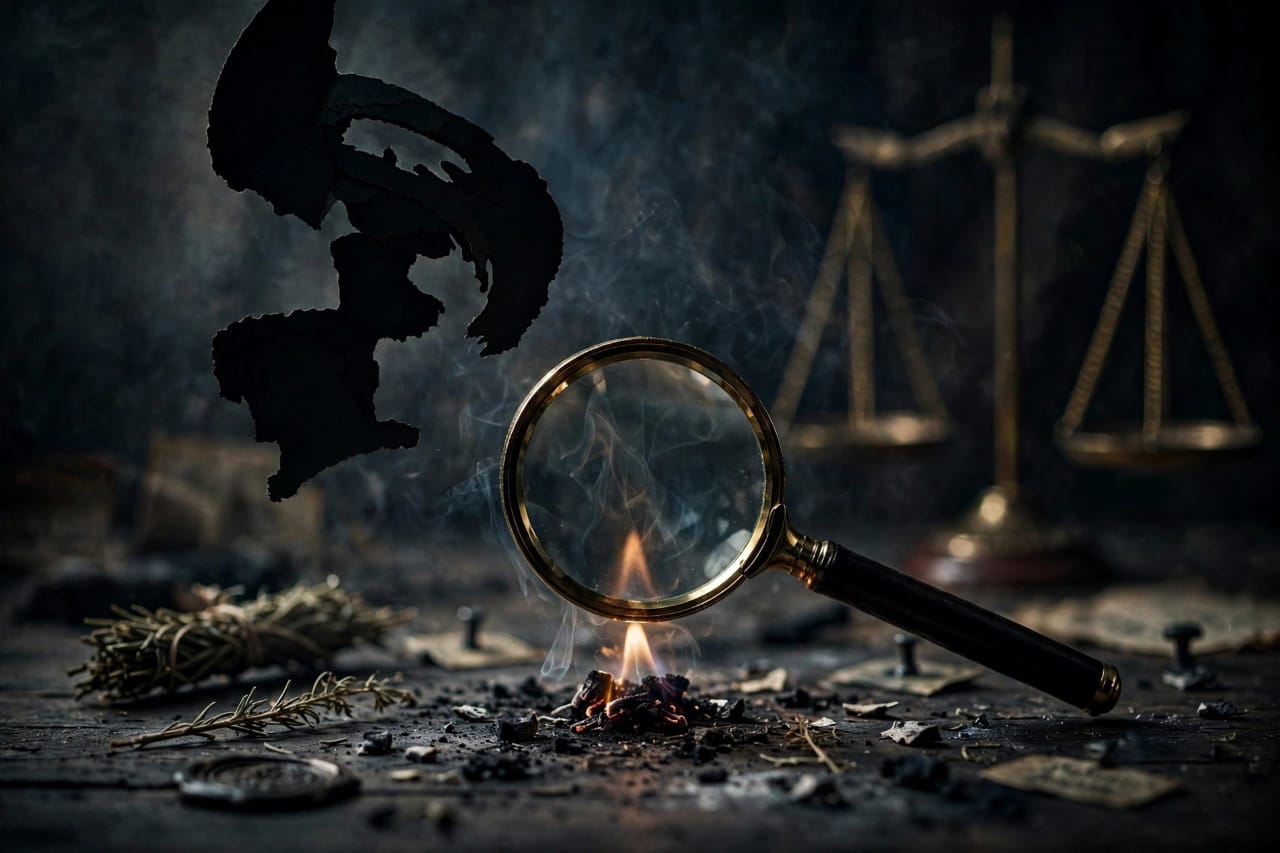
Kampala- There is something deeply unsettling about fire.For centuries, humanity has used it to destroy, to punish, to frighten and, sometimes, to erase what it does not want remembered.
In 1692, Salem, Massachusetts became synonymous with one of history’s most infamous episodes of mass hysteria. Women were accused of witchcraft, suspicion became conviction, and fear became an excuse for extraordinary cruelty. More than three centuries later, Uganda has no witch trials unfolding in courtrooms. But lately, another question has become increasingly difficult to ignore:
What exactly is happening to our girls?
Reports have emerged from different parts of the country of girls being set on fire, with some reportedly left burning in the middle of the night. Three reports are already disturbing enough. The latest, reportedly from Wakiso, has once again dragged the question into public conversation.
And before we rush to connect the cases, there is something important to say: similar incidents do not automatically mean they are connected. That is for investigators to establish. But neither should repeated reports be dismissed as isolated tragedies simply because acknowledging a pattern is uncomfortable. Because if someone is deliberately setting another human being on fire, we have moved far beyond ordinary violence.
We are looking at something that demands answers.Is this a new Salem?
The Salem witch trials were built on accusation. Someone was suspicious. Someone pointed a finger. Someone told a story. And suddenly, suspicion became evidence. The terrifying lesson of Salem was not merely that innocent people were punished. It was that ordinary people can become capable of extraordinary cruelty when fear, rumors and certainty replace evidence.
Uganda’s situation is obviously different. There is no evidence, at least from the reports currently circulating, that these girls are being attacked because they have been accused of witchcraft. But the historical comparison is still worth making because Salem was ultimately about something larger than witches.
It was about what happens when a society becomes comfortable with violence against people it has already decided are somehow disposable. And today, the question isn’t whether someone believes these girls are witches. The question is: Who believes they can get away with doing this to them? Or are we witnessing something even more sinister? There is another possibility that cannot simply be ignored.
Fire can destroy physical evidence. It can damage belongings, surroundings and other traces that might otherwise help investigators reconstruct what happened. That does not mean every fire-related attack is automatically an attempt to conceal a crime. We cannot know that without forensic investigation. But investigators should be asking the question.
If a person is deliberately burned after being attacked, is the fire itself part of the violence or is it also being used to make the truth harder to find? That distinction matters. Because murderers do not need to leave behind a confession. They need only hope that nobody can reconstruct the crime. And that is precisely why forensic investigation matters. We cannot turn victims into rumors
There is another danger emerging alongside these cases: the internet’s appetite for explanation.The moment something horrifying happens, the theories arrive.
Witchcraft.Jealous lovers.Domestic disputes.Criminal gangs.Rituals.Political motives.
Anything that fills the silence before the facts do. And suddenly, a real human being becomes a WhatsApp-forwarded story. We need to resist that. If these cases are connected, investigators should establish how. If they are unrelated, investigators should establish that too. If someone is responsible, they should be identified and prosecuted through evidence…not through social-media speculation. The victims deserve more than becoming characters in Uganda’s latest horror story.
They deserve justice. Three reports should make us uncomfortable. Perhaps the most frightening part isn’t that Uganda has suddenly become Salem. Perhaps the frightening part is that we are becoming accustomed to hearing about violence against girls and then moving on.
Another headline.Another photograph.Another angry Facebook post.Another hashtag.Another promise that something must be done.
Then the news cycle changes.We cannot allow that to happen here.Three reported incidents do not prove a nationwide pattern.
But three reports are enough to justify serious questions.Are these cases being investigated with the urgency they deserve?Are police comparing evidence across jurisdictions?
Are forensic teams being involved?Are witnesses being properly interviewed?
Are survivors and families receiving protection and support?
And most importantly:Are we asking why someone would choose fire?Because that question may tell us something about the crime that a headline never will.
Salem’s greatest warning, The Salem witch trials eventually ended because people began questioning the machinery of accusation and punishment. The authorities eventually recognized that the process had become dangerously unreliable.The lesson survived.Fear is not evidence.Rumour is not evidence.Suspicion is not evidence.And neither is a viral post.
Uganda does not need another Salem. It needs something much less dramatic and infinitely more important: answers. If these attacks are connected, tell the public. If they are not connected, tell the public. If there are suspects, investigate them. If evidence has been destroyed, determine whether that destruction was deliberate.
If girls are being targeted, find out why.Because somewhere between the first report and the third, this stopped being a story we could simply scroll past.
It became a question.And the country deserves an answer.
Are we witnessing a frightening new pattern of violence…or are we simply watching individual crimes disappear into the darkness one victim at a time?
Either way, silence is no longer an acceptable ending.