Spain Reclaim Football’s Greatest Prize: A Memorable Conclusion to the 2026 FIFA World Cup
By: Mugabo Daiel
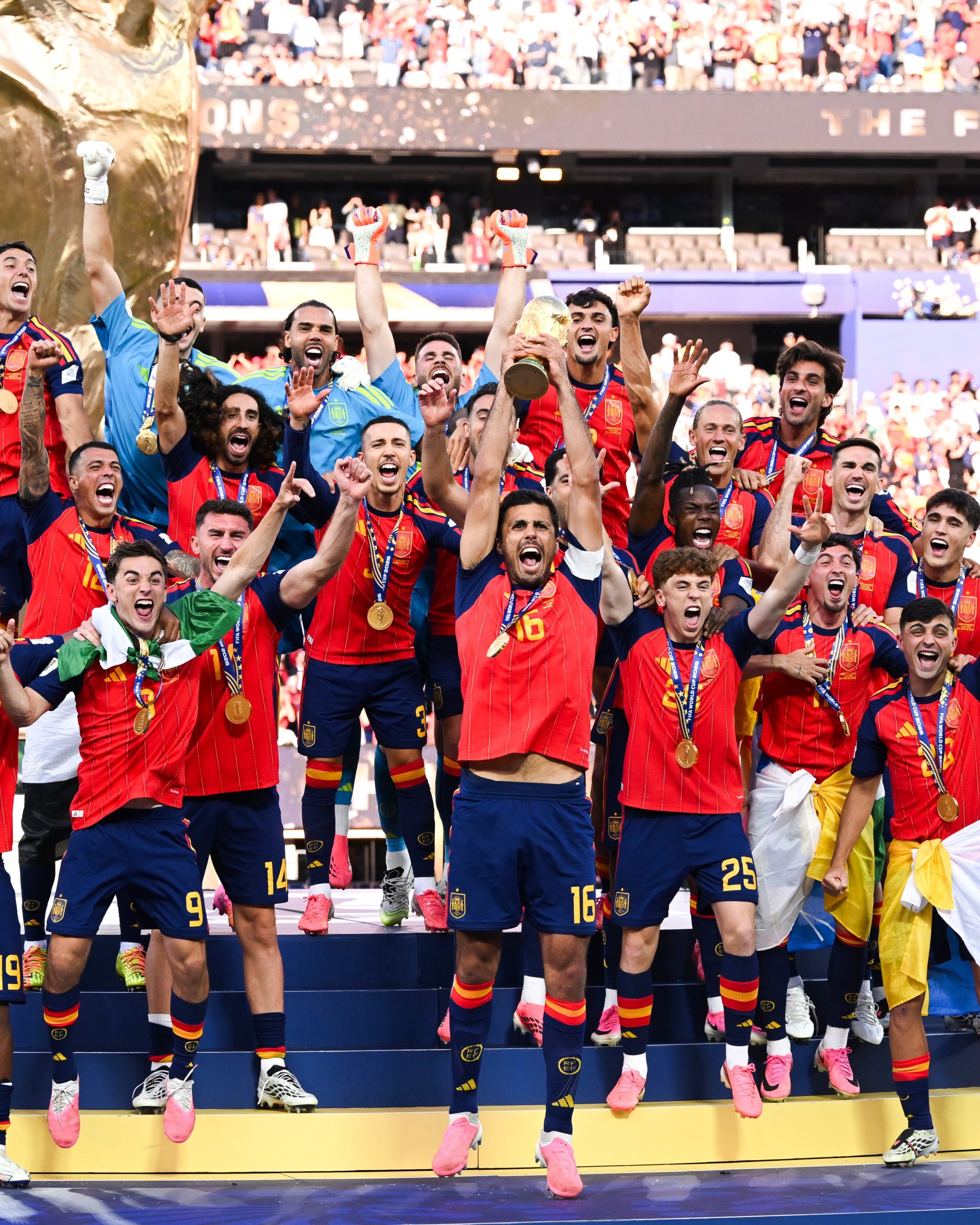
The curtain has fallen on the biggest FIFA World Cup in history, and it ended with a familiar football giant reclaiming its place at the summit of the game. Spain lifted the 2026 FIFA World Cup trophy after defeating defending champions Argentina 1-0 after extra time in a tense and tactical final at MetLife Stadium in New Jersey. Ferran Torres’ decisive strike in the 106th minute sealed Spain’s second World Cup title, ending a 16-year wait since their historic triumph in South Africa in 2010.
The tournament will be remembered not only for crowning a new champion but also for redefining the scale of football’s greatest competition. Hosted jointly by the United States, Canada and Mexico, the 2026 edition was the first to feature 48 nations, expanding opportunities for countries from every continent while delivering more matches, more drama and a broader celebration of the global game. From emotional underdog stories to unforgettable knockout encounters, this World Cup showcased why football continues to unite billions of people across the globe.
The expanded format brought fresh excitement from the group stage. Several emerging football nations proved they belonged on the world stage, challenging established powers and producing memorable performances. Traditional heavyweights such as Spain, Argentina, France and England lived up to expectations, while Morocco once again demonstrated that its remarkable 2022 campaign was no coincidence by reaching the quarter-finals. Norway also emerged as one of the tournament’s surprise packages, defeating Brazil in the Round of 16 before eventually falling to England in the quarter-finals.
As the knockout rounds unfolded, the intensity increased with every match. Spain displayed remarkable consistency throughout the tournament, combining disciplined defending with patient possession football. Their victories over Portugal, Belgium and France highlighted a side that blended technical brilliance with tactical maturity. Argentina, meanwhile, relied on resilience and experience, overcoming Egypt and England to book another appearance in the World Cup final. The defending champions showed tremendous character despite an ageing squad, proving once again why they remain among football’s elite nations.
The final itself lived up to its billing. Spain controlled possession for long periods while Argentina defended with determination, inspired by goalkeeper Emiliano Martínez, who produced a series of outstanding saves to keep his side in the contest. For more than 100 minutes, neither team could find the breakthrough until Ferran Torres finally converted Spain’s relentless pressure into the winning goal. The narrow scoreline reflected the tactical discipline and defensive quality displayed by both finalists in one of the most closely contested World Cup finals in recent memory.
Beyond the results, individual brilliance illuminated the tournament. Spain dominated the post-tournament awards, with captain Rodri winning the Golden Ball as the competition’s best player after controlling matches from midfield with composure and intelligence. Goalkeeper Unai Simón received the Golden Glove following a string of commanding performances, while young defender Pau Cubarsí earned the Best Young Player award for his outstanding displays throughout the tournament. France’s Kylian Mbappé once again demonstrated his extraordinary goalscoring ability by claiming the Golden Boot, reinforcing his reputation as one of the game’s greatest forwards.
The tournament also reflected the changing landscape of international football. Young stars such as Lamine Yamal and Pau Cubarsí showed that a new generation is ready to lead the sport into the future, while legendary figures like Lionel Messi continued to inspire despite approaching the final stages of remarkable careers. The symbolic embrace between Messi and Yamal after the final captured a passing of the torch that many fans will remember for years to come.
Tactically, the World Cup reinforced the growing importance of organised pressing, midfield control and defensive discipline. Spain conceded only one goal throughout the tournament, proving that championships are still built on defensive excellence as much as attacking flair. Their balanced approach contrasted with teams that relied heavily on individual moments, highlighting the value of collective organisation in modern football.
Off the pitch, the tournament demonstrated football’s unmatched global appeal. Record attendances, massive worldwide television audiences and passionate fan support across North America confirmed the continued growth of the game. The successful organisation across three host nations showed that football can unite different cultures while delivering an unforgettable sporting spectacle.
As the celebrations in Spain continue and the football world begins looking ahead to the next international cycle, the 2026 FIFA World Cup leaves behind a lasting legacy. It celebrated emerging talent, honoured legendary players and introduced a new era through its expanded format. Above all, it reminded the world why the FIFA World Cup remains the pinnacle of international football, a competition where dreams are realised, history is written and new champions are crowned.
Spain now stands once again at the summit of world football, but the memories created throughout this remarkable tournament belong to every nation, every player and every supporter who made the 2026 FIFA World Cup a celebration of the beautiful game.
Story By: Mugabo Danniel

Let’s go,, we can do this
Kudos….