The Bananas Are Gone, But the Voice Remains

BY:SSEGAWA HUZAIRU IBRAHIM / Saturday, 29th August, 2026
KAMPALA- Uganda loves an artist when they are dead.There. I said it. Give us a musician, actor, playwright or poet who is alive and watch us complain about them, ignore them, underpay them and ask whether they are still relevant. Watch us wait for them to win something internationally before we decide they are talented. Watch us spend more time arguing about who deserves a platform than actually supporting the people who built one.
But let them die.Suddenly, everybody has a paragraph.Suddenly, politicians have tributes.Suddenly, celebrities are posting black-and-white pictures.
Suddenly, the same people who could not buy a ticket can tell you every achievement. The same industry that rarely celebrated them while they were breathing suddenly discovers the word legend.
And now Alex Mukulu is a legend.But let us get one thing straight.Alex Mukulu was a legend before death made him convenient.
At 72, Uganda has lost one of the sharpest minds to ever stand on a stage. A playwright. An actor. A musician. A songwriter. A trainer. A cultural icon. But perhaps all those titles still feel too small for a man who spent years using a stage to ask Uganda questions many people were too comfortable to avoid.
Because Alex Mukulu was not the kind of artist who simply came on stage, entertained the audience and went home.
He observed.He questioned.He challenged.He made you laugh first, and then made you realise that perhaps you had been laughing at yourself.
And that is what separated him from many entertainers.Because while everybody else was busy performing for applause, Alex Mukulu was performing for reflection.
He wanted you to laugh.But he also wanted you to think.And sometimes, those are two very different things.
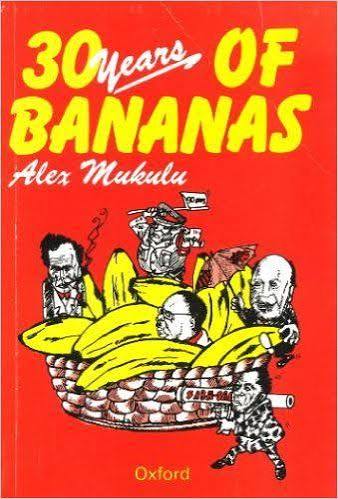
Mukulu became widely known for his acclaimed production 30 Years of Bananas, performed in the early 1990s. The play used caricatures of Uganda’s presidents since independence in 1962 to take audiences through the country’s political history and question the pace of its development.
And honestly, trust Alex Mukulu to give Uganda bananas and somehow turn them into one of the most serious conversations about the country.
Because the joke was never just the joke.That was the genius.30 Years of Bananas became Mukulu’s most successful production, but success alone does not explain its importance. The play encouraged audiences to look at Uganda, not as a country they were told to be proud of, but as a country they were allowed to question.
Where had Uganda come from?Where was it going?And perhaps most importantly:
Why did progress sometimes feel like a promise that had been performing for too long?
Mukulu used a Rwandan refugee as the lead character in the production, a creative choice that allowed him to examine Uganda’s history from what he considered a relatively neutral perspective.
And that was Alex Mukulu.He understood that sometimes the best way to tell people the truth was not to stand in front of them and shout. Sometimes you dressed the truth in comedy. Sometimes you turned it into music. Sometimes you gave it a character and allowed the audience to discover it for themselves.
He turned the stage into a mirror.And unfortunately for Uganda, the reflection was not always pretty.
But maybe that was the point.The death of Mukulu has brought tributes from across Uganda’s cultural and political landscape. The Katikiro of Buganda, Charles Peter Mayiga, described him as a trainer, actor, songwriter and musician who loved Buganda culture and served Kabaka Ronald Muwenda Mutebi II.
That part of his legacy should not be ignored.Because in a generation where culture is constantly fighting for attention against modernity, trends and whatever is going viral this week, Alex Mukulu understood that preserving culture did not mean placing it in a museum and asking everyone to admire it from a distance.
Culture had to live.It had to be performed.It had to be sung.It had to be spoken.And Mukulu helped make sure it was.
National Unity Platform leader Robert Kyagulanyi Ssentamu, himself an artiste, described Mukulu as an “unapologetic voice of reason” in Uganda’s entertainment industry.
And honestly, what better way is there to describe a man whose art was never afraid to look directly at the country and ask it what exactly it was doing?
Because Alex Mukulu did not merely act.He used acting.He used theatre.He used music.He used humour.He used every form of art available to him to say something.
And that is perhaps what makes his death feel bigger than the loss of one actor or one playwright.
Uganda has lost a voice.
Today, we live in an entertainment industry obsessed with numbers. Streams. Views. Followers. Viral moments. Everybody wants to trend. Everybody wants to be talked about. Everybody wants the world to know their name.
But Alex Mukulu belonged to a generation of artists who seemed to understand something much more important:
What is the point of having an audience if you have nothing to say?And Alex Mukulu had something to say.He said it through music.He said it through theatre.He said it through comedy.He said it through characters.He said it through the history of a country still trying to understand itself.
There are people who entertain us, and then there are people who make us uncomfortable while entertaining us.Alex Mukulu was the second kind.
And perhaps those are the artists we need the most.The ones who do not simply tell us what we want to hear.The ones who show us what we have become.The ones who can turn a laugh into a question.The ones who can make an entire room applaud and then send everyone home thinking.
At 72, Alex Mukulu leaves behind more than productions and performances. He leaves behind a lesson for every young Ugandan artist trying to find their voice:
Art does not have to whisper.It can question power.It can preserve culture.
It can challenge history.It can make an entire room laugh before making that same room sit in silence and think.
Alex Mukulu was not just part of Uganda’s entertainment industry.He helped define what it could be.And now, as Uganda says goodbye, perhaps we should do more than write paragraphs and post old photographs.
Perhaps we should ask ourselves whether we truly listened when he was still speaking.Because death has a strange way of making people hear the things they ignored when the person was alive. Alex Mukulu is gone.But Uganda is still here.The history he questioned is still here.The culture he loved is still here.
The problems he turned into theatre are still here.The country he made laugh at itself is still here. And somewhere, perhaps the bananas have finally stopped performing.But the voice.The voice remains.Because Alex Mukulu did not simply give Uganda plays to watch.
He gave Uganda questions to answer.He gave Uganda a stage to look at itself.He gave Uganda a mirror.And mirrors, unlike people, do not die.
So goodbye Mr Alex Mukulu
Indeed, Uganda lost such an irreplaceable character. May God grant Ugandans the wisdom to understand the knowledge embedded in his Art. May His soul rest in eternal peace.
Indeed we lost an icon in the entertainment industry