WHEN ICT MET THE BIG SCREEN

By Ssegawa Huzairu Ibrahim/ Monday 31st August, 2026.
At the Uganda Film Festival Awards Gala, the message was clear: technology may give us the screen, but it is our stories that give us something worth watching.
There is something almost beautifully ironic about celebrating film inside an institution built around technology.
On Friday, August 28, at UICT Nakawa, the Uganda Film Festival Awards Gala Night reminded us of a truth we conveniently forget: a smartphone without content is just an expensive rectangle. A television without stories is just furniture. And a radio without voices is merely noise.
Technology builds the stage.
Artists give us the reason to sit down and watch.
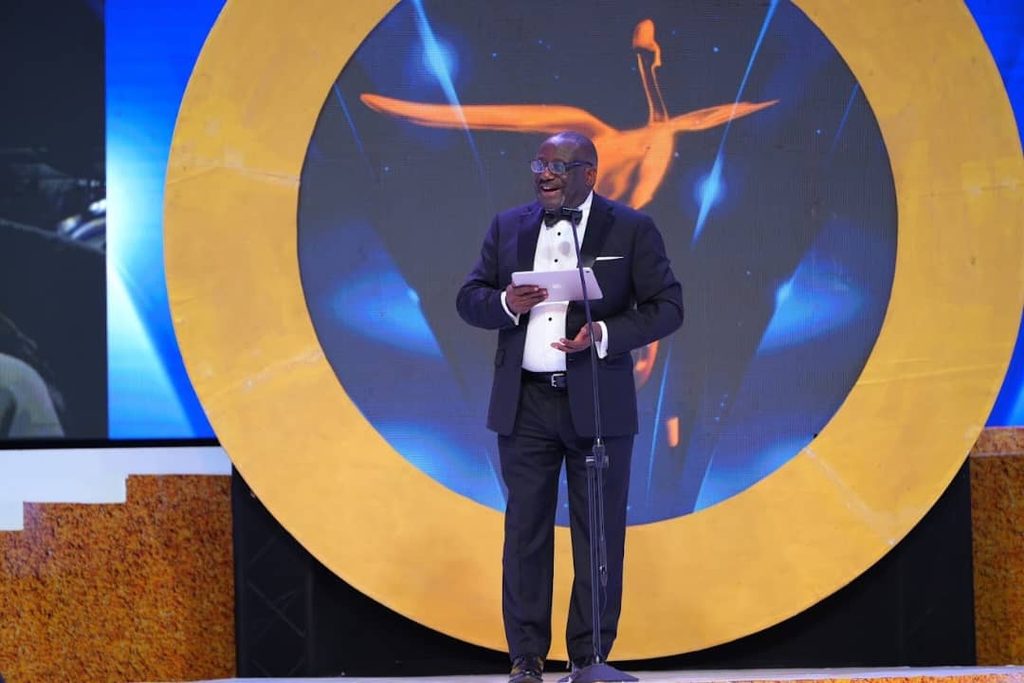
And that is where the Uganda Communications Commission (UCC), under the leadership of Executive Director Nyombi Thembo, enters the picture not merely as the people regulating frequencies and telecommunications, but as an institution with a stake in what Ugandans actually consume through all that technology.
Because what is the point of giving Uganda faster networks, smarter devices and wider digital access if we have nothing meaningful, Ugandan and commercially viable to put on those screens?
The UFF Awards were therefore more than another evening of trophies, speeches and people pretending their outfits were not competing for an award of their own.
They were a statement.
ICT is no longer sitting outside the arts looking in. It is part of the machinery that keeps the creative industry alive.From film production to television, streaming, broadcasting and digital distribution, technology has changed how Ugandan stories are created, sold and consumed. And if Uganda is serious about building a creative economy, then local content cannot remain something we applaud at award ceremonies and forget the following morning.
It has to become business.It has to become jobs.It has to become intellectual property.
And, most importantly, it has to become Ugandan.
The festival’s biggest moments belonged to creators who proved that our industry is capable of producing stories worth putting on the biggest screens.


Mariam Ndagire was among the names that commanded attention, while Andrew Benon Kibuuka also stood out among the festival’s celebrated talent. Their recognition was a reminder that Ugandan cinema does not lack talent. What it has often lacked is the ecosystem capable of turning that talent into sustainable careers.

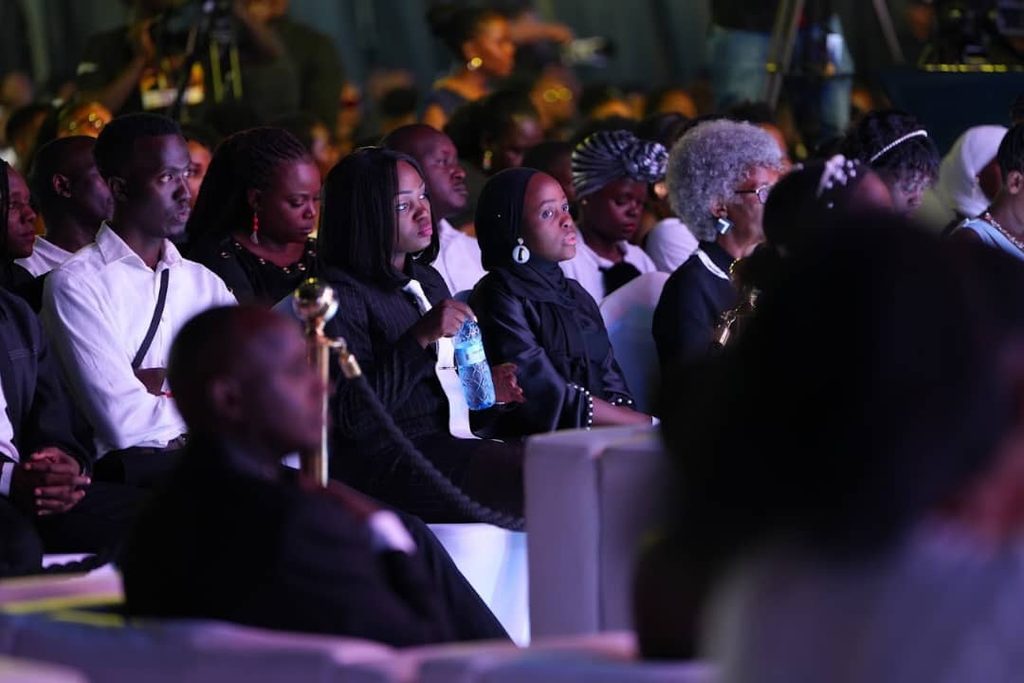
And then came the rest of the winners, quietly making very loud statements.
Okoth Peter and Alibet Joshua took Best Post-Production/Editing for ADUI, proving once again that sometimes the magic of a film happens after everyone has stopped acting.
Elton Gyaza won Best Costume Design for You May Kiss the Bride Goodbye, while Roka Stars, Magoola Jotham and Tumusiime Robert Quintes took Best Production Design for WAKA-WAKA.
Infinity, the musical short by the Nsimbi duo featuring GNL Zamba and Miriam Tamar, won Best Short Film, while Denis Junior Dhikusooka’s Amara and the Spirit of Nyamagunda claimed Best Animation Film, blending folklore, family, bravery and culture into animation.
The Central Region walked away with Best Regional Film through No/Nedda, while Derrick Baka was recognised as Best Actor in a TV Drama/Series for Damalie.
And Diana Kahunde took Best Actress in a TV Drama/Series for Choices.
Different stories. Different creators. Different forms of storytelling.
But one message.
Uganda has stories.
Now, can Uganda build an industry around themThat is the uncomfortable question.
Because producing a film is one thing. Getting it into cinemas is another. Finding a streaming platform is another. Securing broadcast licensing is another. Getting international distribution is another.
And somewhere between the director shouting action! and the audience pressing play, there is an entire commercial ecosystem waiting to be built.
This is precisely why UCC’s involvement matters.
The Commission’s mandate extends beyond telecommunications. It reaches into broadcasting, audiovisual content and the wider communications ecosystem. In a country racing toward digital transformation, the creative industry cannot be treated as the decorative department of development.It is part of development.
The phone you hold, the television you watch and the internet you browse are only as powerful as the ideas moving through them.
And then there is piracy…the villain that never gets invited to the red carpet but somehow always finds its way into the building.
A pirated film does not simply mean someone watched without paying.It means the actor loses.The writer loses.The editor loses.The sound engineer loses.The producer loses.The investor loses.
And eventually, the entire industry loses.
So perhaps the next great Ugandan film should not only be one that wins an award.It should be one that can make money, travel beyond Uganda, employ people, preserve culture and survive long enough for another generation to build on it.
That is the real trophy.
And perhaps that is what made this year’s UFF Gala particularly significant.With UCC and Executive Director Nyombi Thembo among the key supporters of the festival, the message from the intersection of ICT and the arts was impossible to miss:
Technology should not replace our stories. It should carry them further.Uganda does not need to choose between technology and culture.We need technology for culture.We need platforms for our filmmakers. Screens for our actors. Markets for our producers. Protection for our intellectual property. And audiences willing to pay for Ugandan stories instead of searching for the pirated version five minutes after the premiere.
The awards may have ended.The photographs may have been taken.The speeches may have been delivered.But the real film is only beginning.Create. Protect. Commercialise.
And perhaps, finally, let Uganda’s stories become more than something we clap for.Let them become something the world pays to watch.For God and My Country.